
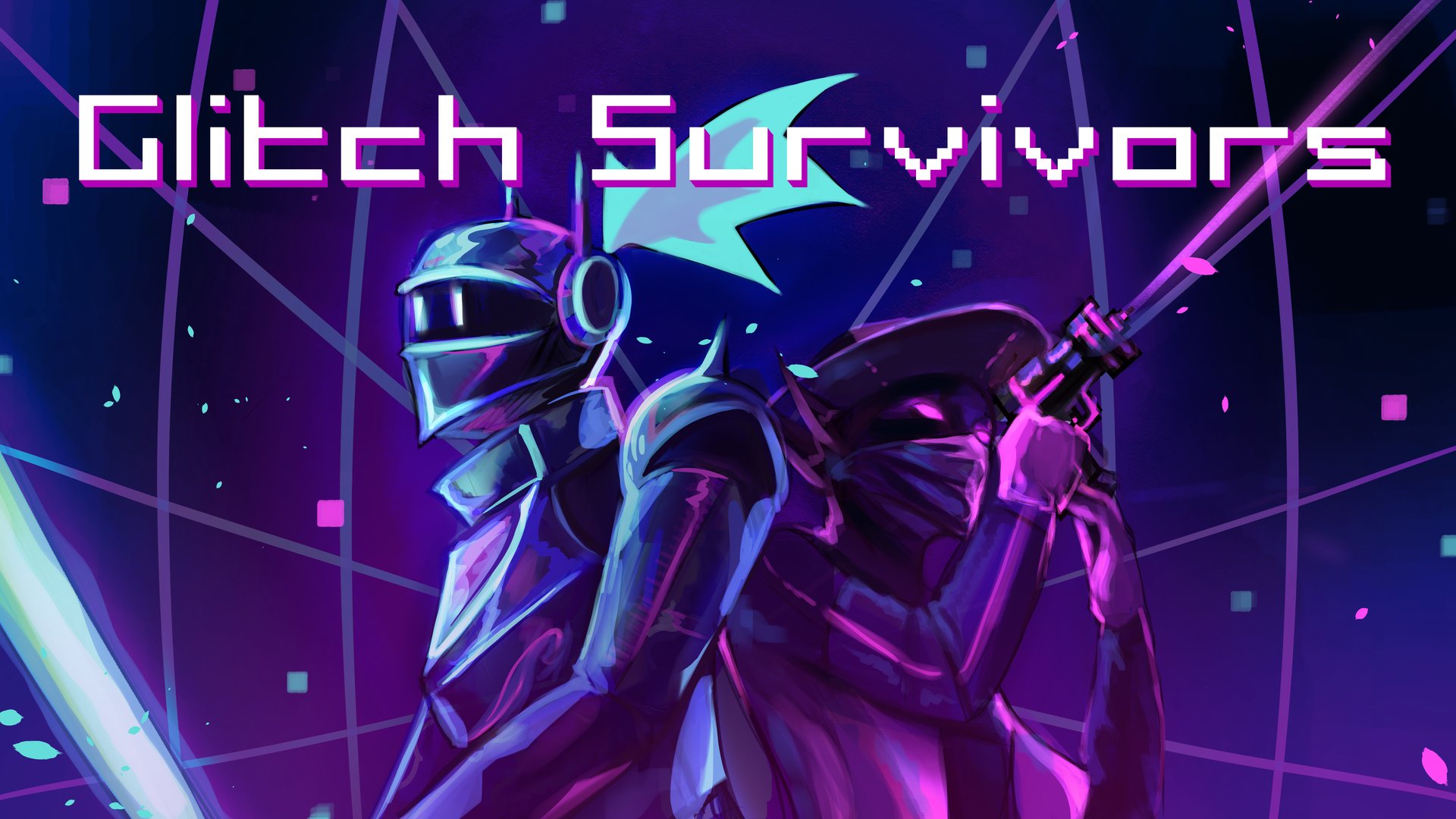
Glitch Survivors (WIP)
Overview
Glitch Survivors is a cooperative "Vampire Survivor" like game in which you control videogame characters in a corrupted PC, trying to survive an horde of viruses and glitches.
In this project, I worked as gameplay designer and Unreal Engine 5 developer, programming with blueprints all the multiplayer systems, all the weapons and the character level progression system.
Diseño que da vida al juego.
Equipo
"

My contributions
Overall gameplay: For this project, we were tasked with developing a game in the style of “Vampire Survivor” but with a multiplayer component. Based on this premise, we held a brainstorming session to explore various ideas, including competitive game modes and combinations with other genres such as tower defense and resource management.
Due to time and scope constraints, we decided to develop a prototype that replicated the gameplay loop of “Vampire Survivors” but added a second player with whom you could collaborate to defeat enemies, focusing on how we could create genuine interaction between the two players.
Combat: This was my primary role in the game's development. I was responsible for designing and implementing the game's five base weapons, as well as a variation of one of them designed to take advantage of the game's cooperative elements.
Base Weapons: The weapon system operates on an inheritance model, simplifying the development of new weapons and variants.These weapons consisted of basic, scalable effects that triggered automatically every x seconds, just like the weapons in “Vampire Survivor.” They were as follows:
Sword: Un ataque en area, con forma cónica orientado en la dirección en la que se mueve el jugador.
Gun: A ranged attack that automatically targets an enemy.
Explosive mine: A bomb that is placed behind the player and explodes upon contact with an enemy.
Electric shield: A shield that spreads out in a circular area around the player and deals damage to enemies on contact.
Cooperative Weapon: The key feature of the combat is the cooperative weapons, which require players to coordinate their actions to get the most out of them. Only one was implemented in the prototype.
Ping Pong Gun: A variation of the standard pistol. The projectile is fired toward the other player, dealing damage to all enemies it hits (it does not break upon impact). If the other player manages to touch the projectile, it will be sent back toward the original player with a slight deflection, increased speed, and damage. This can be repeated indefinitely as long as the players are able to keep bouncing the projectile back, which becomes more difficult as the speed increases.
Progression: I was responsible for designing and implementing the weapon upgrades. I also handled the implementation of the upgrade menu interface and all the logic behind the random selection of upgrades from the pool of available options when leveling up.
Weapon upgrades: La mayoría de armas compartían unos atributos determinados que podían ser mejorados, como el daño, el tiempo de enfriamiento o la cantidad de ataques consecutivos en un mismo cooldown. También podían tener atributos especificos para cada una de ellas, como el escudo electrico, que podía mejorar el tiempo que permanecía activo.
Upgrade selection:
El menú de selección de mejora le muestra cuatro opciones al jugador. El sistema esta montado de forma que solo te puedan aparecer como opciones armas nuevas o mejoras para las armas que ya has conseguido, haciendo que la pool de opciones cambie de forma dinamica en función de lo que ya tienes equipado.
Multiplayer: I Implemented the full local multiplayer. In addition to implementing all the logic that allowed a second player to appear in the level with their own controls and progression, I adapted the rest of the systems that my teammates and I had implemented so that they would work in both single-player and multiplayer modes.
Exhaustive testing and QA of the game, reporting and solving every bug I could find.